Data Ingestion Pipeline
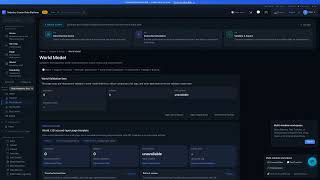
500+ episodes/hour throughput. Upload via API, S3/GCS sync, fleet agent streaming, or direct SVRC data collection integration. Automatic schema validation, timestamp sync checks, and metadata extraction on every ingest.
From data collection to fleet deployment — 86+ integrated tools for ingestion, annotation, training, simulation, teleoperation, safety validation, and enterprise operations. One platform, every stage of the robot learning lifecycle.
Robot learning is advancing fast, but the infrastructure around it has not kept up. Most teams run into the same three walls once they move past proof-of-concept:
Teleoperation episodes live on individual laptops, shared NAS drives, and random S3 buckets. Nobody knows which dataset was used for which training run, and finding a specific failure episode takes hours of manual searching. When a researcher leaves, their data organization leaves with them.
Your deployed policy drops an object 12% of the time. Where exactly does it fail? At what joint angle? On which object type? Without frame-level replay linked to joint states and gripper data, debugging is guesswork. Teams spend weeks re-collecting data for failures they cannot precisely diagnose.
You trained v7 of your policy. Is it actually better than v6? On which tasks? Without experiment tracking, held-out evaluation sets, and regression testing, every release is a leap of faith. Teams oscillate between versions because they lack the evidence to make confident decisions.
Fearless exists to solve these three problems with a single platform that connects data collection, analysis, evaluation, and retraining into one continuous workflow.
Fearless is built as a modular pipeline with five stages. Each stage operates independently but shares a unified data model.
Episodes enter Fearless through the upload API, fleet agent streaming, or direct SVRC data collection integration. The ingestion pipeline validates episode structure against your schema, checks timestamp synchronization, extracts metadata, and indexes all streams for fast retrieval. Supports batch upload (S3/GCS sync) and real-time streaming from deployed robots. Ingestion throughput: 500+ episodes/hour for standard HDF5 format.
Built-in annotation tools for adding language instructions, task phase labels, keyframe markers, success/failure labels, and custom tags to episodes. Supports batch annotation workflows for large datasets. Annotations are stored as structured metadata linked to specific timestamps, not baked into the data files. Export annotations in COCO, VIA, or custom JSON schemas.
Define training configurations that reference specific dataset versions. Kick off training runs on your own compute or SVRC-managed GPU clusters. Track hyperparameters, training curves, and resource utilization. Automatic checkpointing and experiment comparison. Integrates natively with LeRobot and Hugging Face training scripts. Custom training frameworks supported through a standard launcher API.
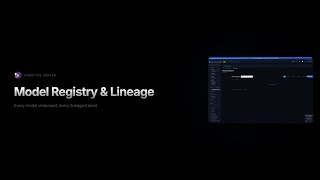
Every trained model is versioned and linked to the exact dataset, training configuration, and evaluation results that produced it. Compare model versions across metrics. Promote models through staging environments (dev, staging, production). Full audit trail from data to deployed model. Export models in ONNX, TorchScript, or native framework format.
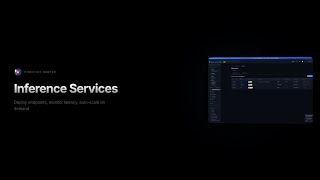
Lightweight fleet agent streams deployment data back into Fearless. Monitor success rates, failure modes, and performance degradation in real-time. When a deployed policy encounters a new failure, the episode flows directly into your failure mining queue. Automatic alerts when policy performance drops below configured thresholds. This closed loop is what separates teams who improve steadily from teams who plateau.
Every stage of the robot learning lifecycle — from raw data ingestion through fleet deployment and safety validation — organized into six domains.
500+ episodes/hour throughput. Upload via API, S3/GCS sync, fleet agent streaming, or direct SVRC data collection integration. Automatic schema validation, timestamp sync checks, and metadata extraction on every ingest.
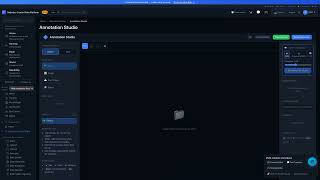
Add language instructions, task phase labels, keyframe markers, success/failure tags, and custom metadata. Batch annotation workflows for large datasets. Export in COCO, VIA, or custom JSON schemas. Annotations link to specific timestamps, never baked into data files.
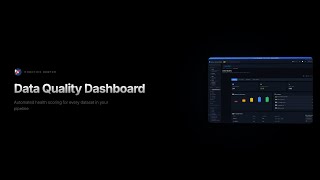
Automatic quality metrics on every episode: timestamp jitter, camera frame drops, joint state discontinuities, and calibration drift. Flag low-quality episodes before they contaminate your training set. Quality dashboards across your entire data estate.
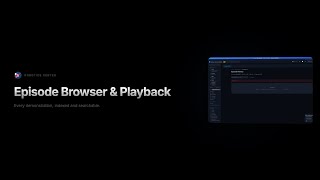
Frame-level replay with synchronized joint states, camera feeds, and gripper aperture. Scrub to the exact moment a grasp fails. Overlay target vs. actual positions. Filter by task, operator, robot, success/failure, or date range. Export annotated clips for review.
Every model versioned and linked to exact dataset, config, and eval results. Compare versions across metrics. Promote through dev/staging/production. Export ONNX, TorchScript, or native format. Full audit trail from data to deployed model.
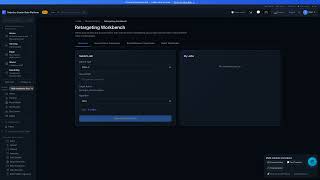
End-to-end pipeline from dataset curation to training, evaluation, and deployment. Trigger retraining on failure-rate thresholds or dataset size. Native LeRobot and Hugging Face integration. Custom frameworks via standard launcher API.
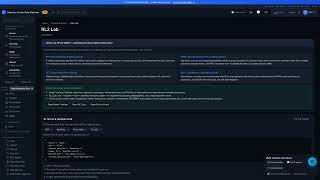
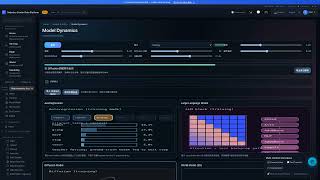
Experiment with vision-language-action architectures. Benchmark ACT, Diffusion Policy, Octo, RT-2, OpenVLA, and custom VLA models. Side-by-side evaluation on held-out episodes. Track which architecture works best for your task distribution.
Kick off training on your compute or SVRC-managed GPU clusters. Track hyperparameters, training curves, and resource utilization. Automatic checkpointing and experiment comparison. Model evaluation scores flow back for tracking.
Generate synthetic training scenarios from learned world models. Predict future states, test policy robustness against simulated perturbations, and augment real-world datasets with physics-consistent synthetic episodes.
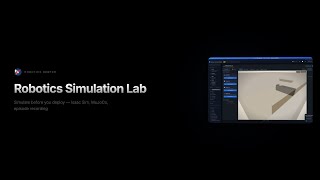
Visual scene editor for constructing simulation environments. Drag-and-drop objects, configure physics properties, set up camera viewpoints, and define task specifications. Export scenes to MuJoCo, Isaac Sim, or custom simulators.
Describe a scene in natural language and generate 3D environments for simulation. Create diverse training scenarios at scale without manual asset creation. Integrate generated scenes directly into your simulation pipeline.
Built-in robotics simulation for policy testing before real-world deployment. AGV path planning and fleet logistics simulation. Validate policies in diverse environments before committing to physical hardware time.
Monitor every robot across facilities from a single dashboard. Track deployment status, software versions, uptime, and utilization. Push policy updates to selected robots or entire fleets. Role-based access per facility or robot group.
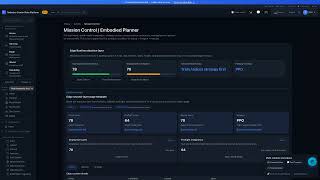
Define, schedule, and monitor robot missions. Real-time task progress, queue management, and priority overrides. Automatic fallback handling when a robot encounters an unrecoverable state. Mission logs feed directly into the episode browser.
Low-latency remote teleoperation with multi-camera views, force feedback, and VR controller support. Operator performance tracking. Every teleop session automatically captured as a training episode. Works with glove, pendant, and leader-follower setups.
Live dashboards for joint torques, latency, success rates, and failure modes across your fleet. Configurable alerts when performance drops below thresholds. Historical trend analysis. Export metrics to Grafana, Datadog, or custom monitoring stacks.
Structured safety validation with ODD (Operational Design Domain) definitions, FMEA worksheets, and safety case templates. Link safety requirements to test episodes that verify them. Maintain a traceable chain from hazard analysis to evidence.
Automatically flag anomalous episodes: force spikes, unexpected velocities, gripper mismatches, task timeouts. Surface highest-impact failures first. Cluster similar failures to separate systematic issues from noise. One-click replay from failure report.
ML-based anomaly detection across joint trajectories, force profiles, and camera feeds. Detect distribution shift between training data and production behavior. Early warning before failures manifest. Configurable sensitivity per robot and task.
Benchmark cycle times, throughput, and resource utilization across your fleet. Identify bottlenecks in perception, planning, and execution. A/B test policy versions on live traffic. Quantify the impact of every model update.
Transparent usage-based billing with per-team and per-project breakdowns. Storage, compute, and API usage tracked in real time. Invoice history, budget alerts, and cost allocation tags for finance teams.
Integrated service ticket system for robot maintenance and repair. Parts inventory management with reorder alerts. Link tickets to specific robots, episodes, and failure reports. Track mean time to repair across your fleet.
Complete maintenance history for every robot: calibrations, part replacements, firmware updates, and inspection records. Schedule preventive maintenance based on usage hours or cycle counts. Exportable for compliance audits.
Centralized operations knowledge base with runbooks, troubleshooting guides, and best practices. Operations playbooks for common scenarios. Searchable across your organization. New team members get up to speed faster.
Fearless is the operating system layer between your hardware, your AI models, and your deployed fleet. It does not replace your training framework or control stack — it connects every piece into a single closed loop.
Deployment data flows back into Fearless automatically. Every failure in production becomes a data point for the next training cycle. This is the closed loop that separates teams who improve steadily from teams who plateau.
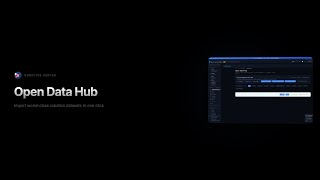
Fearless ingests the formats robot learning teams actually use. No conversion scripts required for standard formats; custom formats are supported through a pluggable parser API.
| Format | Use Case | Support Level | Details |
|---|---|---|---|
| HDF5 | ACT, ALOHA, and most imitation learning pipelines | Native | Hierarchical episode structure, random access via h5py, supports nested observation/action groups |
| RLDS | Google DeepMind RT-X and Open X-Embodiment datasets | Native | TFRecord serialization, tf.data streaming, cross-embodiment schema compatible |
| LeRobot Parquet | Hugging Face LeRobot training and dataset sharing | Native | Compact MP4 video storage, one-command HF Hub push, Apache Arrow for fast columnar access |
| MP4 + JSON | Video recordings with sidecar metadata files | Native | H.264/H.265 video with JSON metadata sidecar, automatic frame extraction |
| ROS Bag | ROS1/ROS2 recordings from robot systems | Import | Automatic topic extraction and conversion to native format on import |
| Custom | Proprietary formats via pluggable parser API | API | Python parser interface, schema definition DSL, automatic validation |
Fearless connects to your existing stack through three integration paths.
A lightweight ROS2 node that subscribes to your robot's topics (joint states, camera images, gripper commands) and streams them directly to Fearless as structured episodes. Configure topic mappings in YAML. Supports ROS2 Humble and Iron. Automatic episode segmentation based on configurable triggers (e.g., gripper open/close, task start signal).
pip install fearless-ros2-bridge
Full programmatic access to the platform. Upload episodes, create datasets, trigger evaluations, query metrics, and manage fleet data. Type-annotated, async-compatible, with comprehensive docstrings. Supports batch operations for large-scale workflows.
pip install fearless-sdk
OpenAPI 3.1 specification covering all platform operations. Episode upload, dataset management, evaluation triggers, metric queries, fleet data ingestion, and model registry operations. TypeScript SDK also available. Rate limits: 1,000 req/min (Startup), unlimited (Enterprise).
Docs: developers/
Fearless is purpose-built for robot learning data. Here is how it compares to alternatives teams commonly use.
| Capability | Fearless | Custom Scripts | W&B / MLflow | Scale AI |
|---|---|---|---|---|
| Robot episode replay (joint + camera sync) | Built-in | Manual build | Not supported | Not supported |
| HDF5 / RLDS / LeRobot native support | Native | Per-format code | Generic artifact | Not supported |
| Failure mining & anomaly detection | Automatic | Manual analysis | Metric tracking only | Not supported |
| Policy evaluation framework | ACT, DP, VLA, custom | Custom eval scripts | Generic metrics | Not supported |
| Fleet deployment monitoring | Real-time dashboard | Custom telemetry | Not designed for | Not supported |
| Dataset versioning with hardware lineage | Built-in | Git LFS / DVC | Artifact versioning | Not supported |
| Self-hosted / air-gapped deployment | Enterprise plan | Yes (you build it) | W&B Server only | No |
Start free for research. Scale up when your team and data grow.
Free
For university labs and non-commercial research
$249/mo
For early-stage robotics companies
Custom
For production robotics operations
RESTful API with OpenAPI 3.1 specification. Python and TypeScript SDKs. Covers all 86+ platform operations: episode upload, dataset management, training triggers, fleet commands, simulation control, and safety validation. Rate limits: 1,000 req/min (Startup), unlimited (Enterprise). Webhook and event-stream support.
Native support for vision-language-action architectures: ACT, Diffusion Policy, Octo, RT-2, OpenVLA, and custom VLA models. World model inference for synthetic data generation. Simulation-in-the-loop evaluation before real-world deployment. Model export in ONNX, TorchScript, and native formats.
Integrated simulation environments for policy validation. World Studio for 3D scene construction. Text-to-3D generation for synthetic training scenarios. MuJoCo, Isaac Sim, and custom simulator export. AGV logistics simulation for warehouse and factory floor planning.
Cloud-hosted on SVRC infrastructure (US-West and EU regions) with 99.9% uptime SLA. Enterprise self-hosting via Docker + Kubernetes (Helm chart provided). Air-gapped installations for defense and regulated industries. Minimum self-host: 8-core CPU, 32 GB RAM, GPU recommended.
Encrypted at rest (AES-256) and in transit (TLS 1.3). Logical tenant isolation. No data shared across organizations or used for SVRC model training. GDPR-compliant with US and EU residency options. Full data export at any time in original formats. SOC 2 Type II audit in progress.
Export datasets in HDF5, RLDS, or LeRobot format. Bulk export via API. Push directly to Hugging Face Hub. No vendor lock-in: your data stays in standard, open formats. Cancel and download everything within 90 days. Simulation scenes exportable to MuJoCo, Isaac Sim, and USD.
You are collecting teleoperation data for imitation learning research. You need to organize episodes across multiple students and projects, compare policy variants for publications, and share datasets with collaborators. Fearless gives you versioned datasets, reproducible evaluations, and a single place where your lab's data lives beyond any individual researcher.
You are building a product that relies on learned manipulation policies. You need to iterate quickly: collect data, train, evaluate, deploy, observe failures, and retrain. Fearless connects this loop so your engineering team stops spending 40% of their time on data pipeline plumbing and starts spending it on the model and the product.
You are running robots in production across multiple facilities. You need fleet-wide visibility into policy performance, systematic failure analysis, and an auditable trail from data collection through deployment. Fearless provides the compliance, access controls, and operational dashboards that production environments require.
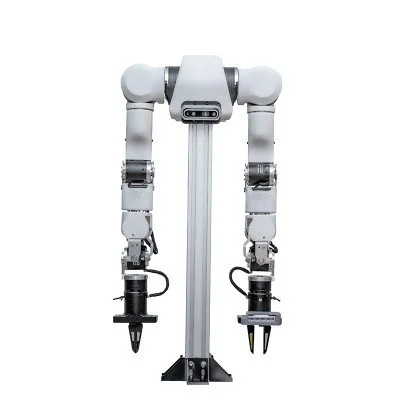
Works with any robot that produces standard data formats. Buy compatible hardware directly from our store.
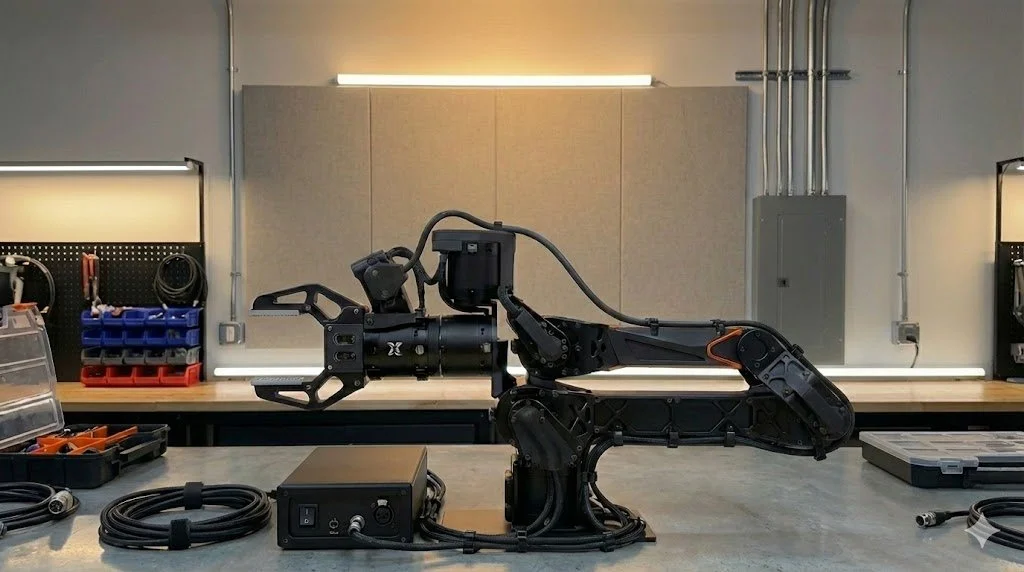
SVRC's open-source 7-DOF research arm
Buy →Precision research manipulator
Buy →Universal Robots collaborative arms
Buy →Humanoid robot platform
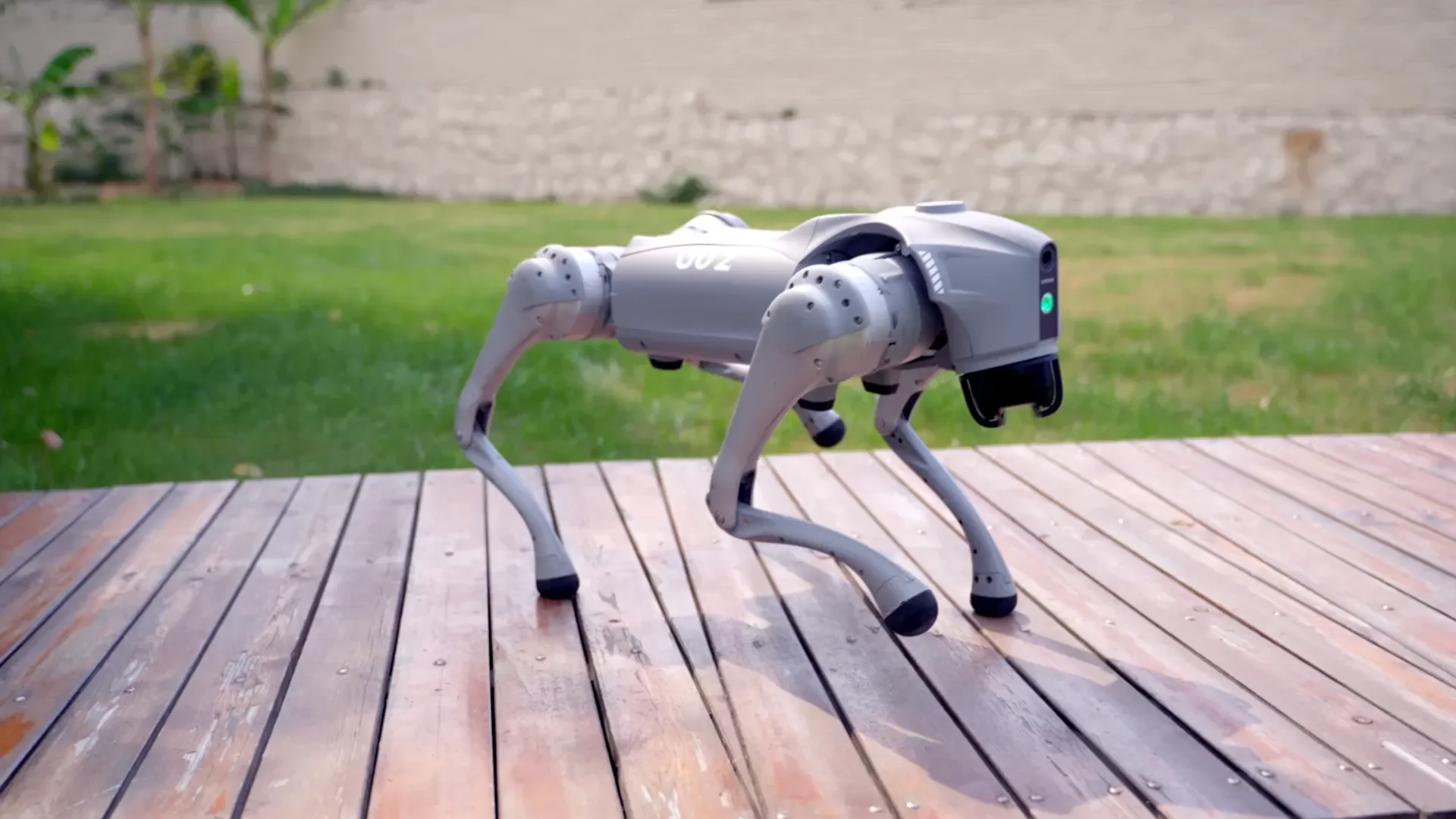
Buy →Quadruped robot
Buy →Lightweight leader-follower arm
Buy →Bimanual mobile manipulation
Buy →Affordable entry-level arm
Buy →These are just the robots we stock. Fearless works with any robot that produces standard data formats (HDF5, RLDS, LeRobot, ROS Bag, MP4+JSON). Browse our full hardware catalog →
Yes. Your data is encrypted at rest and in transit, logically isolated from other organizations, and never used for SVRC's own training or shared with third parties. Enterprise customers can self-host for complete data sovereignty. We support GDPR data residency requirements with US and EU hosting options.
Fearless is robot-agnostic. It works with any hardware that produces standard data formats (HDF5, RLDS, LeRobot, ROS Bag, MP4+JSON). We have tested integrations with OpenArm, Franka Research 3, UR5e/UR10e/UR20, Unitree G1/Go2, AgileX Piper, Mobile ALOHA, SO-100, and many more. If your robot produces joint states and camera images, Fearless can ingest it. Browse compatible hardware in our store.
Yes, on the Enterprise plan. Self-hosted Fearless runs as a set of Docker containers orchestrated by Kubernetes (Helm chart provided). Minimum requirements: 8-core CPU, 32 GB RAM, and GPU recommended for evaluation workloads. Air-gapped deployments are supported for defense and regulated environments.
Fearless reads and writes LeRobot Parquet format natively. You can push a curated dataset from Fearless directly to a Hugging Face Hub repository for training with LeRobot. Retraining pipeline triggers can invoke LeRobot training scripts on your own compute or on SVRC-managed GPU clusters. Evaluation results from LeRobot training runs flow back into Fearless for tracking.
Yes. The Fearless API follows OpenAPI 3.1 and supports all platform operations: episode upload, dataset management, evaluation triggers, metric queries, and fleet data ingestion. Python and TypeScript SDKs are available. API access is included in the Startup and Enterprise plans.
Research plan: 500 GB. Startup plan: 5 TB. Enterprise plan: unlimited. Storage is measured by raw uploaded data size. For reference, a typical ALOHA bimanual episode (3 cameras, 50 Hz joint data, 30-second task) is approximately 150 MB. A 500 GB allocation holds roughly 3,300 episodes of this type.
Yes. The platform supports ROS bag import with automatic topic extraction and conversion. Specify the topic-to-field mapping in the import configuration, and Fearless converts the bag into a native episode format for replay, annotation, and evaluation.
The fearless-ros2-bridge is a lightweight ROS2 node that subscribes to your robot's topics and streams data directly to Fearless. Configure topic mappings in a YAML file. Automatic episode segmentation based on triggers you define (gripper events, task signals, timeouts). Supports ROS2 Humble and Iron distributions. Install via pip.
Native integration with LeRobot and Hugging Face training pipelines. Custom training frameworks are supported through a standard launcher API — you provide a training script that accepts a dataset path and config file, and Fearless handles orchestration, checkpointing, and result tracking.
Yes. Enterprise data collection campaigns include Fearless Platform access. Data collected by SVRC operators flows directly into your Fearless workspace with full metadata, QA reports, and lineage information. This is the most efficient path to a closed-loop data-to-deployment pipeline.
Managed teleoperation campaigns that deliver training-ready datasets directly into Fearless.
OpenArm 101, DK1, UR series, and more. Purchase or lease the hardware that generates your training data.
Technical deep dive on HDF5, RLDS, and LeRobot formats with conversion examples.
Technical guides covering data collection, teleoperation setup, policy training, and deployment.